The preceding chapters have established the architectural, climate, commercial, and risk-management theses on which the iONE platform is constructed. This chapter addresses the operational question that follows from those theses: the identity, the track record, and the demonstrated competence of the team that has constructed the platform to its current state and that will execute the deployment trajectory across the Seed and post-Seed horizon (the Seed round funds platform delivery to commercial validation). The chapter is structured around the five operational competencies that the platform requires for delivery to commercial scale, rather than around individual biographical portraits.
The platform requires five operational competencies for delivery to Seed maturity and to the deployment trajectory beyond it: heavy-infrastructure delivery at industrial scale; power-electronics and solar-system engineering across European deployment conditions; financial operations and human-resources discipline; supply-chain governance, certification, and regulatory delivery; and the senior commercial and production-scaling capability required for the post-Seed industrial-deployment phase. The founder team currently constituted at G.T. GmbH covers four of these competencies through operational track record that the present chapter documents in turn. The fifth — senior commercial leadership for the institutional customer segments and a production-scaling executive for the contract-manufacturing trajectory — is the subject of the post-Seed institutional hiring programme that the platform has structured into the Seed use-of-funds allocation, addressed in the final section of this chapter alongside the broader institutional-governance arrangements that the platform's Seed close is engineered to deliver. The founder of the platform is, by independent operational track record, an industrial operator at multi-decade scale across institutional banking, large-scale industrial infrastructure ownership, regulatory-inflection commercial capture, and parallel technology-portfolio investment.
1. Industrial Operation at Scale: Ivan Gorb, Managing Director
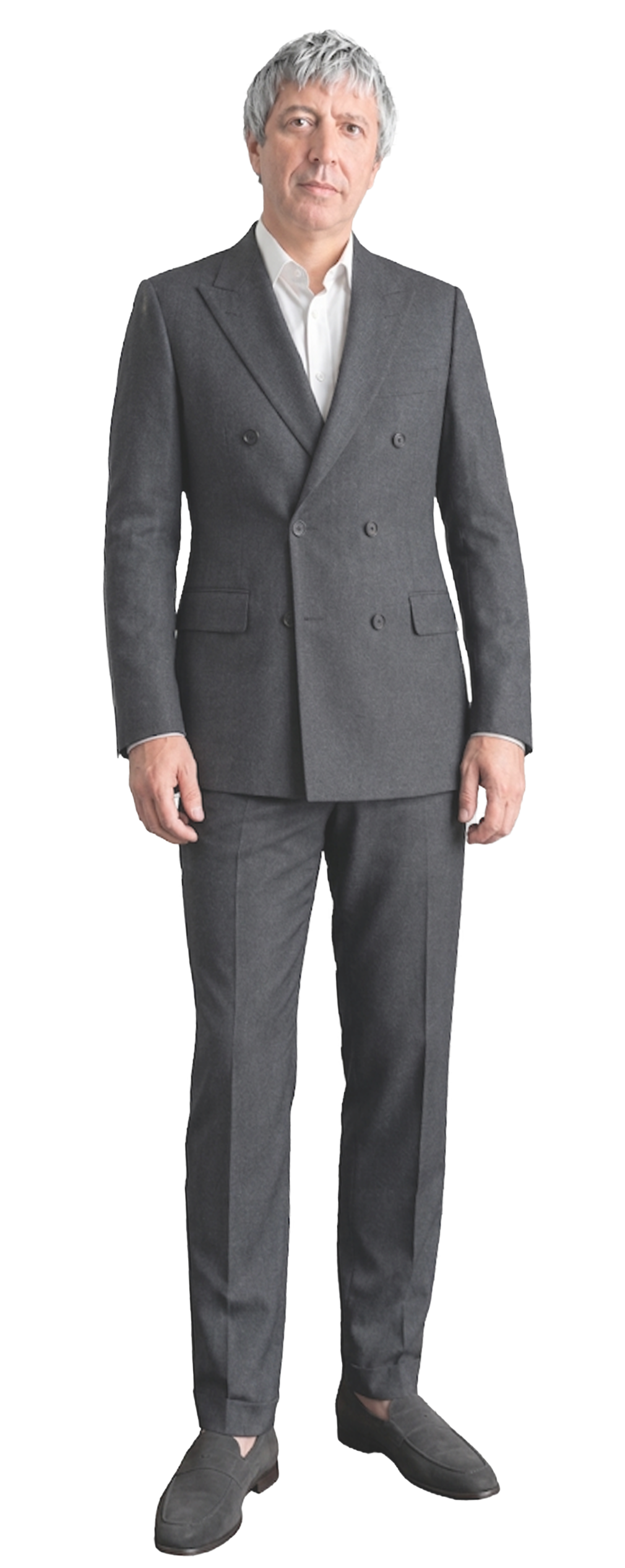
Ivan Gorb
Odessa, Ukrainian SSR · 28 March 1971
Managing Director
G.T. GmbH · Berlin
The founder's operational track record across the preceding twenty-five years spans four sequential and partially overlapping phases of industrial and institutional delivery: institutional banking and corporate-credit operation across the late 1990s and early 2000s; large-scale industrial-infrastructure construction and operation across the 2004 to 2021 period; parallel technology-portfolio investment and direct operational engagement across the 2010 to 2020 period; and the European climate-infrastructure phase that the founder has been operating since the October 2021 relocation. Each of the phases has contributed a specific operational competence that the iONE platform's architecture explicitly draws upon, and each is documented in this section in the sequence in which it contributes to the current platform thesis.
The first phase, between 1999 and 2004, was institutional banking. The founder joined a Moscow commercial bank constituted in the institutional reconstruction following the 1998 Russian financial crisis as one of three founding shareholders, progressing to managing director through the bank's development cycle — introducing VISA and Diners Club card issuance, operating the corporate-banking and corporate-credit relationships, and maintaining the formal Ernst and Young external-audit relationship under the institutional-counterparty standards of the period. He exited voluntarily in August 2001, completing an orderly transfer of client relationships before departure. The competence accumulated — corporate-credit underwriting discipline, contractual-architecture design under cross-border legal regimes, and institutional counterparty management — is the substrate on which the GT Energy Family banking-counterparty architecture documented in Chapter VII has been engineered.
The second phase, between 2004 and 2021, was large-scale industrial-infrastructure construction and operation: as owner-founder, an industrial infrastructure portfolio across the Baltic regional corridor — land development, mining and aggregates, road, utility, and thermal-power infrastructure — scaling to a 100,000-tonnes-per-annum heavy fuel-processing operation developed from greenfield to operational maturity (currently held under appointed representation for divestment). Across 2015–2021 the founder operated as integrator for compliant marine-fuel supply under the IMO 2020 sulphur-transition framework: he engineered the compliant-fuel processing technology ahead of the transition deadline, entered commercial supply in 2019 — a year before the 1 January 2020 sulphur cut-off — and across 2020–2021 operated under a substantial premium pricing envelope as one of a very limited group of operators able to deliver compliant fuel into the European-flag vessel bunkering market, with a counterparty base including tier-one international oil majors. Team sizes ran consistently above one hundred personnel against capital budgets above twenty-five million euros.
The strategic precedent is direct: the identification of a regulatory and infrastructure inflection ahead of the broad market, the engineering of a compliant product before competitors organise around the new envelope, and the capture of the early-mover premium. The iONE platform is engineered against the same pattern, applied to the post-2022 European energy-resilience and climate-infrastructure inflection rather than to the IMO 2020 marine-fuel inflection.
The third phase, approximately 2010–2020, was parallel technology-portfolio investment across the European IT and software-products category. The founder operated as principal investor and active operational counterparty to KranX Productions and related portfolio companies in mobile gaming and software products, with capital deployment in the EUR 2 to 2.5 million range, gaining direct exposure to the architectural patterns of client-server interaction, distributed-system design, real-time telemetry, and user-side state management — the same engineering substrate the iONEOS distributed-fleet telemetry layer documented in Chapter IV is constructed against. The phase also established the sixteen-year professional partnership with Marina Guseva, who joined G.T. GmbH at its 2023 foundation as Chief Data Officer (Section 4).
The fourth phase, since October 2021, is the European climate-infrastructure phase. The founder relocated to Berlin with his family in October 2021, establishing the European residential and operational base ahead of the geopolitical disruption of the subsequent period and reflecting a deliberate consolidation of his industrial-infrastructure and technology-portfolio expertise into the European climate-infrastructure category. Across the relocation period between October 2021 and June 2023, the founder operated in a consulting capacity across European energy-infrastructure projects while developing the iONE thesis, and in June 2023 constituted G.T. GmbH (operating previously as Gorb Tech UG) as the operating platform for the iONE deployment programme. At the date of this memorandum the founder has been resident in Germany for over four and a half years and has been operating G.T. GmbH as Managing Director for nearly three years, with the operational and architectural depth of the platform documented across the preceding chapters and the founder's personal financial commitment formally documented at over EUR 374,000 in capitalised shareholder loans, with additional substantial operational expenses carried personally outside the formal loan account. The platform reaches the present memorandum at a founder-commitment depth that materially exceeds the founder-experience profile typically engaged at the Seed stage of the European climate-tech category.
2. Power-Electronics and Solar Engineering: Witalij Tenkow, Chief Technology Officer

Witalij Tenkow
Chief Technology Officer
G.T. GmbH · Berlin
The platform's power-electronics and solar-system engineering competence is held by the Chief Technology Officer, Witalij Tenkow, whose track record across the European solar-deployment market underlies the platform's hardware-architecture and component-validation decisions. He operates the hardware-engineering function full-time, drawing on an independently owned family contracting operation — operationally distinct from G.T. GmbH — that has executed over two hundred solar-system installations across the European market.
The substantive competence is operational solar-and-storage engineering across European climatic and deployment conditions: site-specific photovoltaic design, inverter and MPPT qualification, battery-management and storage integration, electrical-protection and grid-interface engineering, and field-installation discipline. The two-hundred-plus installations span the full operating range the platform serves — Northern European, Central European, and the broader EU solar-and-storage market — and are the basis on which the component-validation programme documented in Chapter VII is conducted.
The family contracting operation continues independent commercial activity across the Polish and Central European markets — an established regional base for the platform's eastern-flank deployment.
3. Supply-Chain Governance, Certification, and Financial Operations: Mariia Khodorkova, Chief Operating Officer

Mariia Khodorkova
Chief Operating Officer
G.T. GmbH · Berlin
The platform's supply-chain governance, certification-pipeline management, regulatory-delivery, and financial-operations function is held by the Chief Operating Officer, Mariia Khodorkova, an eighteen-year professional partner of the founder across multiple operational ventures preceding the climate-infrastructure phase. The scope spans vendor-relationship management across the bill-of-materials supplier base; the certification pipeline through which the iONE platform aligns with the EU Battery Regulation 2023/1542 framework (Chapter IV §1) — CE, LVD, EMC, RoHS, IEC 62619, and UN 38.3; and financial-flow management across the G.T. GmbH operating entity, including the shareholder-loan account, the operational expense ledger, and compliant records under German corporate-reporting frameworks. The partnership has been calibrated, over multiple commercial and infrastructure cycles preceding iONE, against the discipline institutional engagement requires.
The function is the operational counterpart to the founder's architectural role: he constructs the thesis and the architecture; she delivers the documentation, the regulatory pipeline, and the financial compliance institutional engagement requires.
4. Data Architecture and Human-Resources Discipline: Marina Guseva, Chief Data Officer

Marina Guseva
Chief Data Officer
G.T. GmbH · Berlin
The platform's data-architecture and human-resources function is held by the Chief Data Officer, Marina Guseva, a sixteen-year professional partner of the founder across the KranX Productions and adjacent IT-portfolio ventures (Section 1), who joined G.T. GmbH at its 2023 foundation. Her background spans the IT operations of mobile gaming, financial technology, legal technology, and the automotive-industry IT stack. At G.T. GmbH she owns the data-architectural layer through which the iONEOS telemetry stream and the distributed-fleet data asset (Chapter IV) are constituted, the human-resources function across the operating team and advisor base, and the IT-operations discipline maintained at institutional-counterparty standard.
Her particular depth is the automotive-IT stack — among the most demanding commercial software environments, operating against safety-critical performance envelopes, type-approval regulatory frameworks, multi-vendor integration, and long-horizon maintenance discipline — whose architectural patterns are direct precedents for the iONEOS telemetry-stream architecture and the institutional-counterparty data-governance the platform requires. The real-time client-server, telemetry, and state-management patterns from her mobile-gaming background are the same ones the iONEOS distributed-fleet layer is engineered against.
Academic and Research Partnerships
The platform's academic-research architecture is constituted through the engagement of Vladislav Andrushko, doctoral candidate at the Technical University of Darmstadt under the supervision of Professor Iryna Gurevych — Director of the Ubiquitous Knowledge Processing Lab, founding member of the Hessian Centre for Artificial Intelligence (hessian.AI), member of the Leopoldina National Academy of Sciences, and holder of the European Research Council Advanced Grant. Andrushko's research addresses self-supervised learning methodologies applied to autonomous cyber-physical systems, providing the academic-research substrate against which the iONEOS predictive-maintenance methodology trajectory is constituted. The scientific consultation contributes to the iONEOS probabilistic intelligence layer documented in Chapter IV §3.
The engagement operates at the research-collaboration level, with formal academic standing distinct from the operational team structure. It grounds the iONEOS predictive-maintenance methodology (Chapter IV §3) in one of Europe's leading machine-learning research programmes. Specific model architectures and dataset-collection design are subject to the operational telemetry the first deployment cohort generates, with the academic engagement positioned to bridge the platform's methodological readiness to the operational evidence the Validation Programme produces.
5. Acknowledged Gaps and the Seed Resolution
Two operational competencies are not currently held within the founder team and are addressed through the post-Seed institutional hiring programme that the present Seed round is structured to deliver. The first is senior commercial and business-development leadership for the institutional customer segments — the telecommunications-edge, critical-entities-resilience, industrial, and government-procurement segments documented in Chapter VII — where the platform's go-to-market trajectory requires senior-counterparty engagement capability beyond the founder-direct sales relationships that have characterised the platform's pre-Seed commercial engagement to date. The second is a production-scaling executive with industrial-assembly background, recruited to operate the contract-manufacturing relationships on which the capital-light scaling architecture documented in Chapter VI depends, and to manage the production-quality, supply-chain, and operational-discipline functions at the volume scale the post-Seed deployment trajectory will require.
Both hires are structured into the Seed use-of-funds rather than recruited pre-Seed, on the basis that institutional-grade executives are recruited against confirmed Seed capital and the governance environment the Seed close establishes — including independent board appointments at close and the co-governance structure with the lead climate investor — not against the pre-Seed discount they correctly decline to engage. The gaps are identified, the resolution sequence is structured into the capital allocation, and the recruitment criteria are documented.
Bridge to Chapter IX
The platform's four full-time operational competencies plus academic-research consultation bring the memorandum to institutional-engagement stage. Chapter IX closes with the round structure — programmes in process, partnership architecture, and the institutional ask the platform extends to World Fund.